10 March 2023
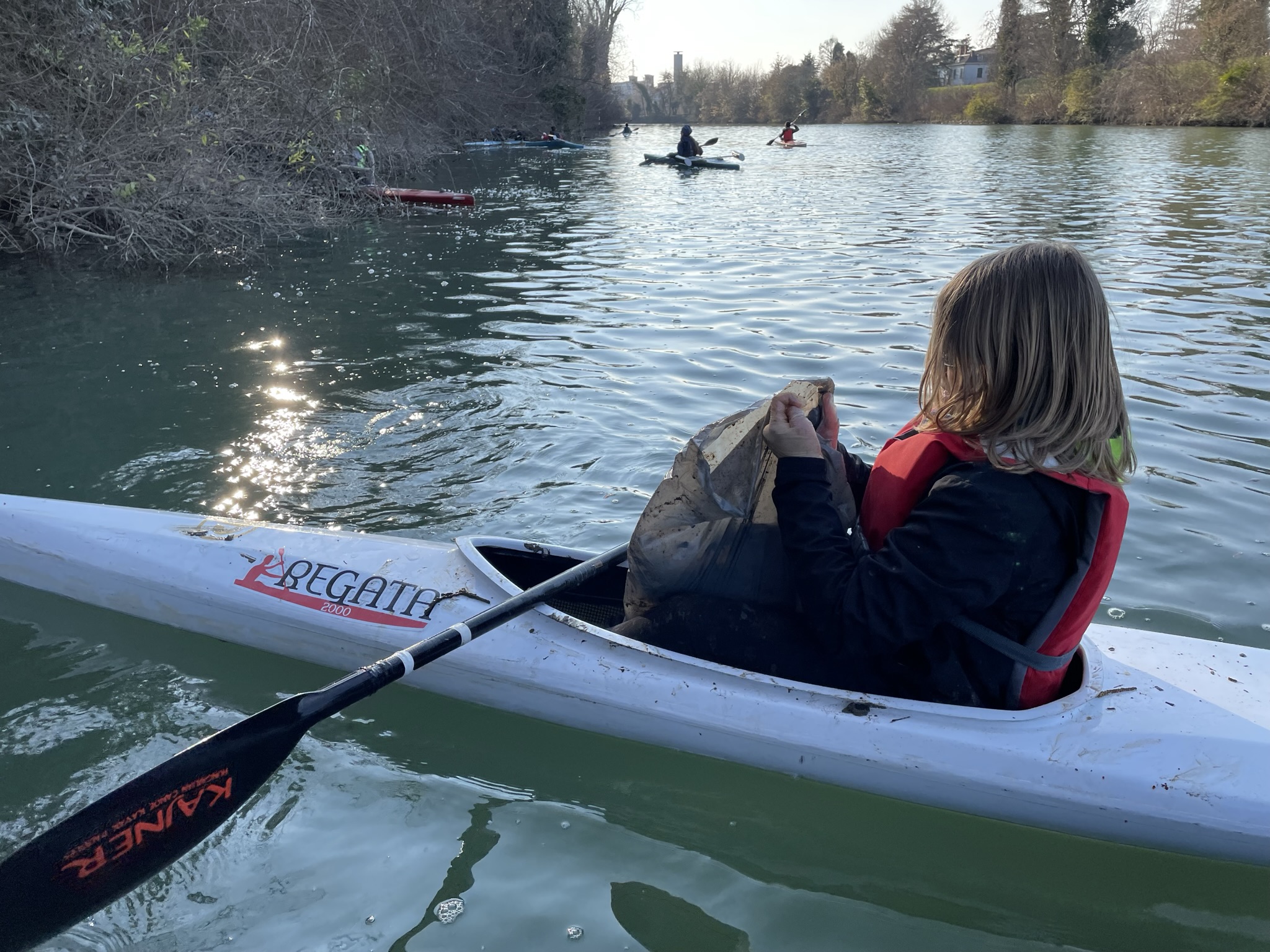
A compelling article by Sergio Barbadoro appeared in the November 2022 issue of Pagaiando, clearly describing the serious problem of plastic pollution in general and, in particular, its presence in waterways and the sea.
Just a few numbers are enough to highlight the scale of the problem: since 1950, the year production began, more than 9 billion tons of plastic have been produced. Today, it is the third most widely used material in the world after steel and concrete. Every year, over 100 million tons are discarded without proper management, of which only 9% is recycled. The more plastic is used, the more is thrown away, and it is estimated that most of it ends up in rivers, lakes, and the sea.
Over time, plastic that reaches the sea is broken down by constant impacts, sunlight, wind, and temperature changes into extremely small particles measured in nano and micro sizes—almost like atoms, with diameters smaller than one millionth of a millimeter. It is easy to understand how these micro-particles enter the food chain, especially among fish, 73% of which are contaminated. Considering that the Mediterranean Sea is one of the most polluted in the world, with a concentration of 7% of these particles, there is real cause for concern—especially knowing that traces of nano-particles have already been found in the salt we use for cooking.
These figures and the simplified explanation of how these pollutants are generated should lead us to reflect carefully on our own activities in rivers and seas, including canoeing. Even we, often unknowingly, contribute to the release of micro and nano plastics. Fleece garments and synthetic clothing, which we frequently wear during our outings, release nano-plastics into the air through friction, contaminating the environment and entering the animal respiratory system. The clothing industry uses 61% of the synthetic fibers produced annually; each wash of synthetic fabrics releases about 1,900 nano-particles per garment—tiny particles that are not filtered by wastewater treatment plants and therefore return to the water ecosystem.
After reading these striking facts, the first question that naturally arises is: what can we do? Each of us can make a difference, knowing that the use of plastic is closely linked to the potential damage it can cause to the ecosystem if not managed properly. The basic lesson is clear: do not disperse it into the environment—recover it, collect it, recycle it, and keep our waterways clean.
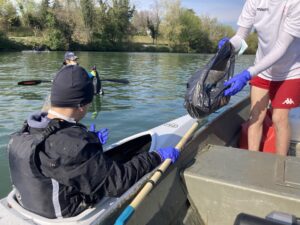
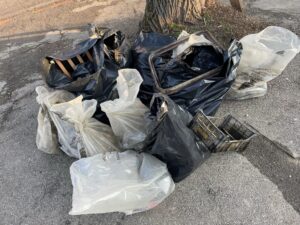
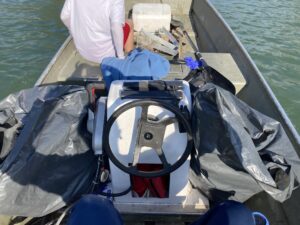
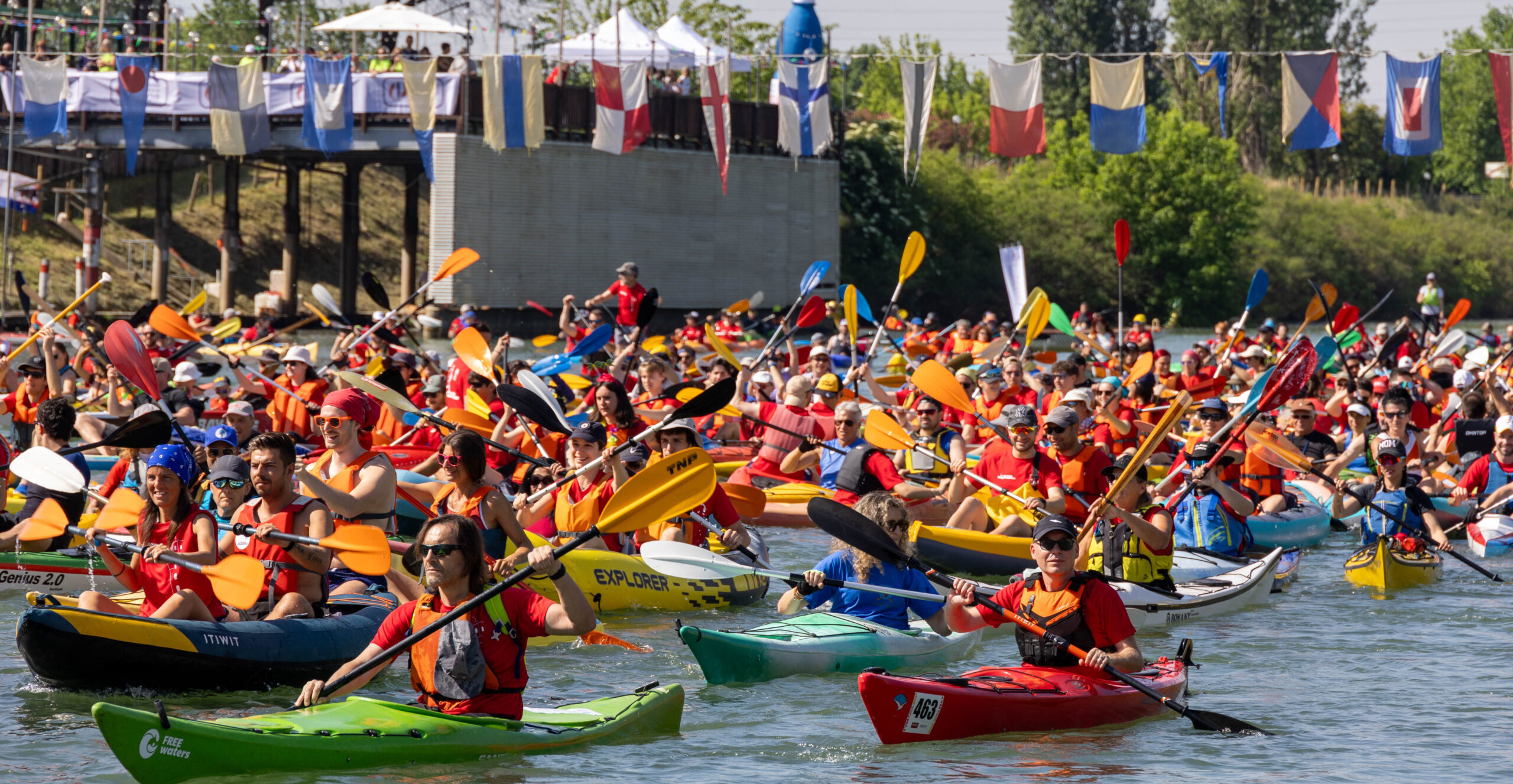
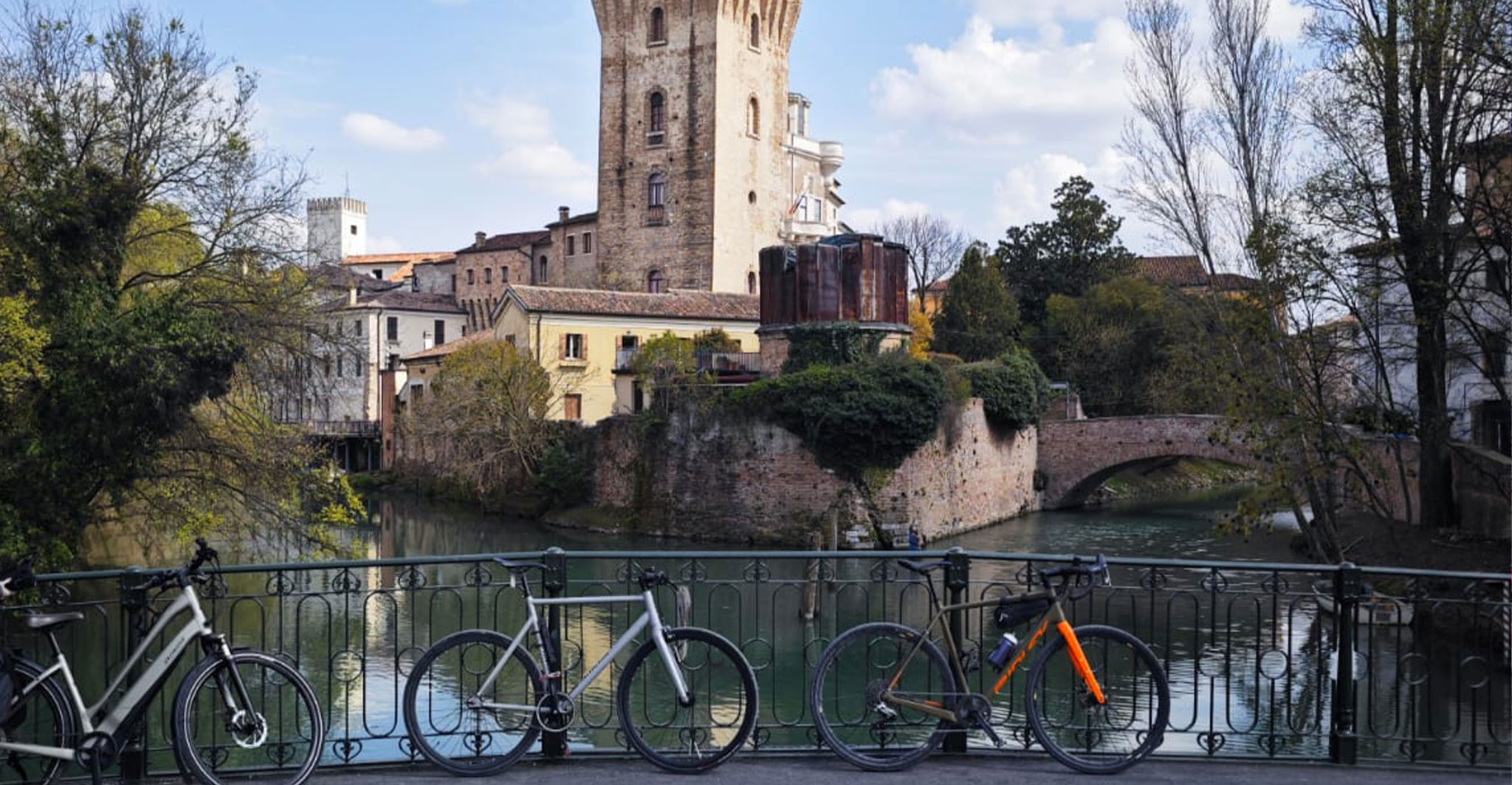
Canottieri Padova, like many other sports and social organizations around the world, has been organizing for several years an ecological day on March 25 dedicated to cleaning the river. The Under 14 participants take to the water in canoes along about 5 km of the Bacchiglione River, from the club headquarters to the outskirts of Padua, collecting plastic deposited by the river—but especially waste carelessly thrown by people—using their own gloves. The filled bags are then loaded onto support boats that follow the group and provide operational assistance. At the end of the day, once back at the headquarters, dozens of bags are handed over to municipal waste collection services. This day serves to deliver a strong message and a direct lesson to all the young participants—one they are unlikely to forget—and also reminds members to take care of the Bacchiglione, our natural training ground, used for over 100 years by many types of boats, every day, for many hours.