22 February 2022

It is curious to tell how the people of Padua—and those of many other inland cities—in the first half of the 19th century enjoyed swimming and sunbathing during the summer, freely using the river and canals that crossed the city. At that time, the city was not as densely populated as today, and large areas were still dedicated to gardens and fields.
Back then, the idea of holidays was almost non-existent. Nearby Adriatic beaches or exotic destinations, so easily reachable today, did not yet exist. Floodplain areas were the meeting point for families, who splashed around in the Bacchiglione and smaller waterways, sometimes finding shelter under makeshift structures and changing cabins that certainly did not guarantee hygiene, privacy, or safety—not to mention the water quality, which was nevertheless carefully monitored. The municipal hygiene regulations allowed bathing in a section of the Naviglio from June 1st to the end of August, under the supervision of four guards on two boats, using a shelter with changing cabins described in an 1879 report as “so poor that one hesitates to enter.” Il Regolamento comunale di Igiene permetteva i bagni in un tratto del Naviglio dall’1 giugno a tutto agosto, sotto la vigilanza di quattro sorveglianti su 2 barche, utilizzando una tettoia con dei camerini “che mette pena a entrarvi” come riportato in una relazione dell’assessore all’igiene del 1879.
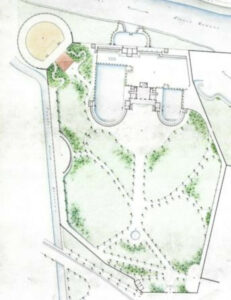
In the second half of the century, a long and lively debate took place between the Municipality of Padua, professionals, entrepreneurs, university professors, and doctors to identify the most suitable location for building a public bathing facility. Various proposals were put forward. Among the projects studied in the early 1900s was one that envisioned transforming a private garden of nearly 56,000 square meters into a swimming complex with two large pools, a main building for common areas, refreshments and changing rooms, long avenues, a solarium on the Alicorno bastion, cabins along the Venetian walls, and access to the Tronco Maestro.
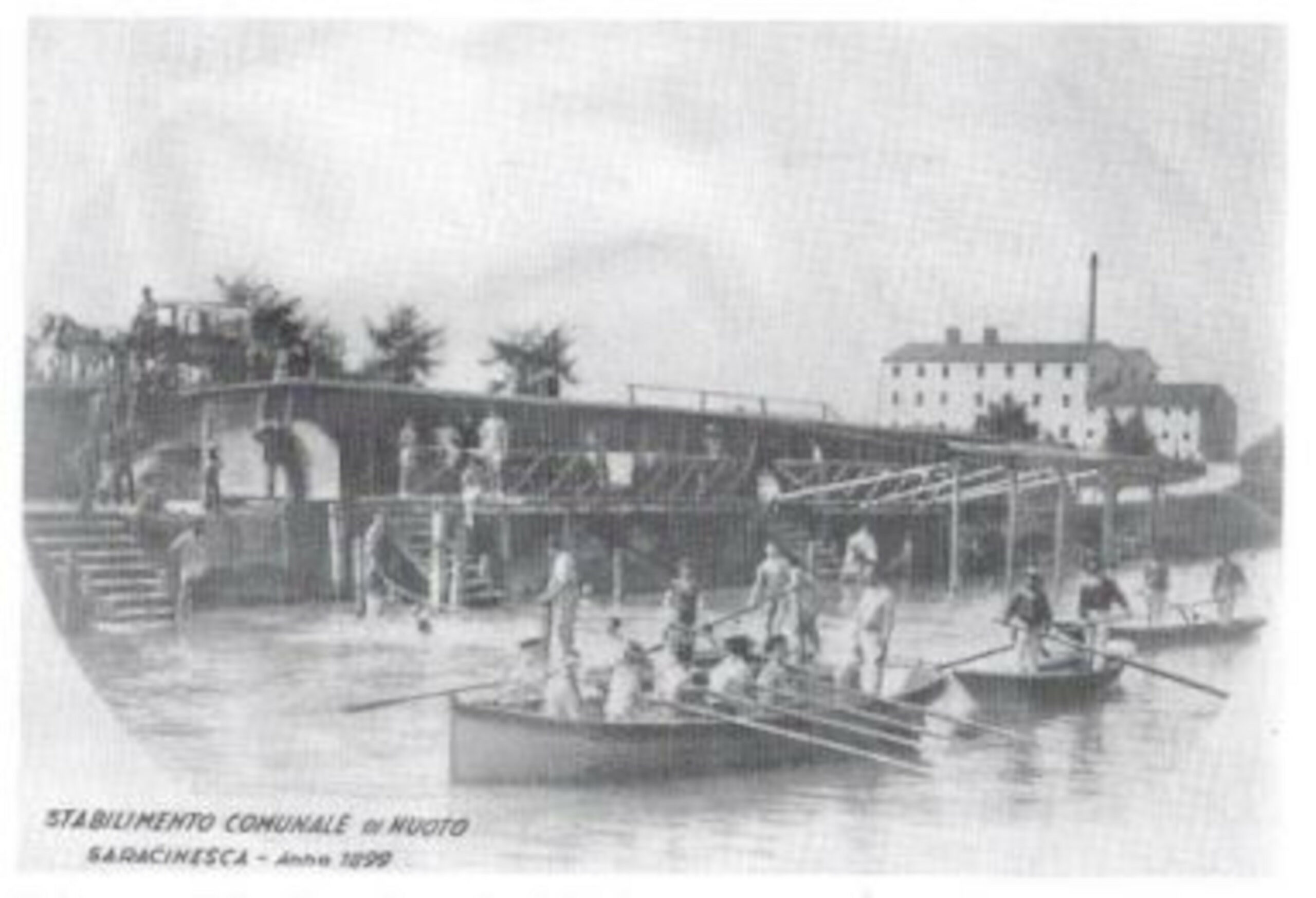
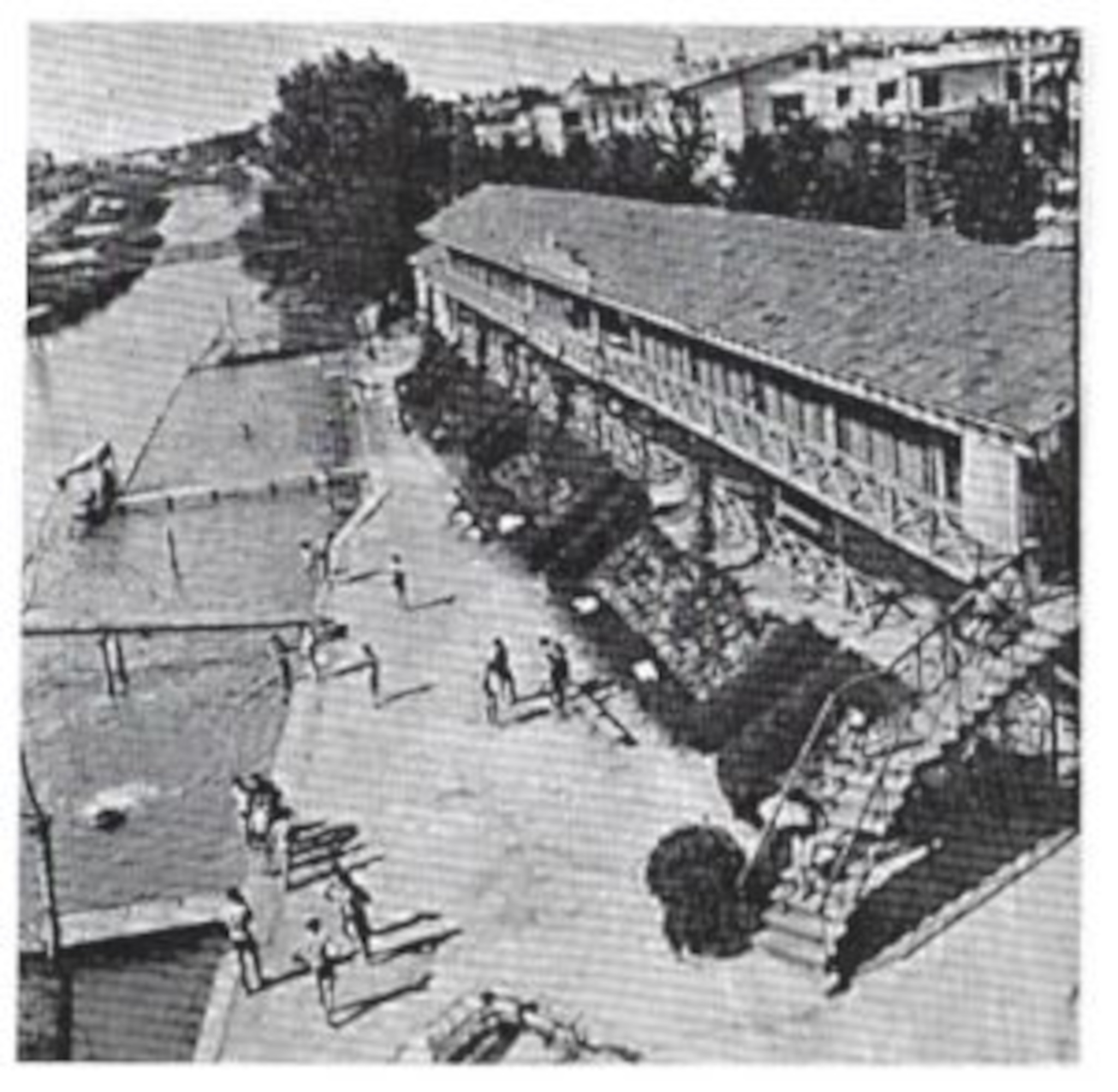
These aspirations were finally realized in 1906, when the public bathing facility was inaugurated on the floodplain of the Alicorno tower, based on a project by the Public Works Office of the Municipality of Padua and managed by the newly established sports association Rari Nantes Patavium.
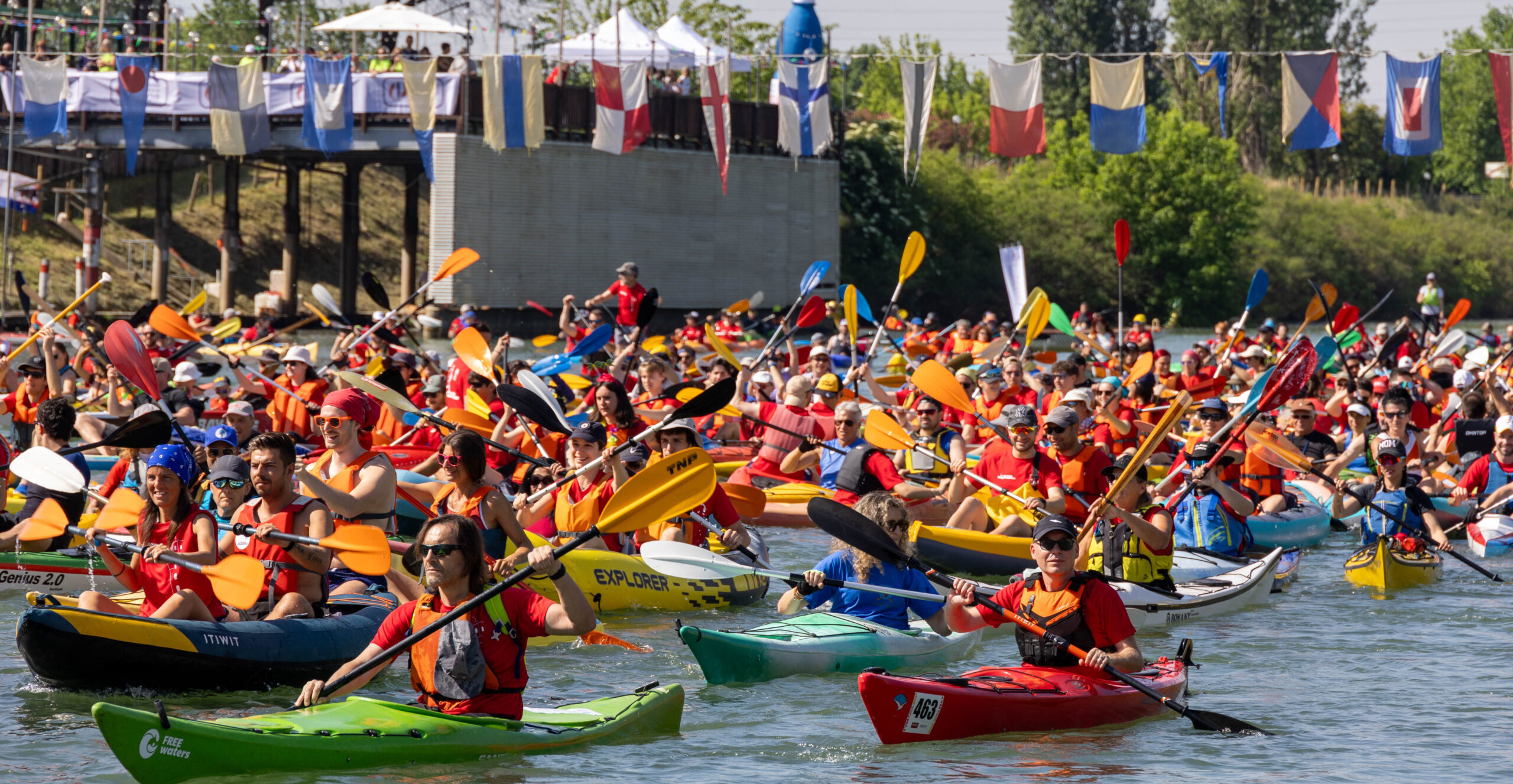
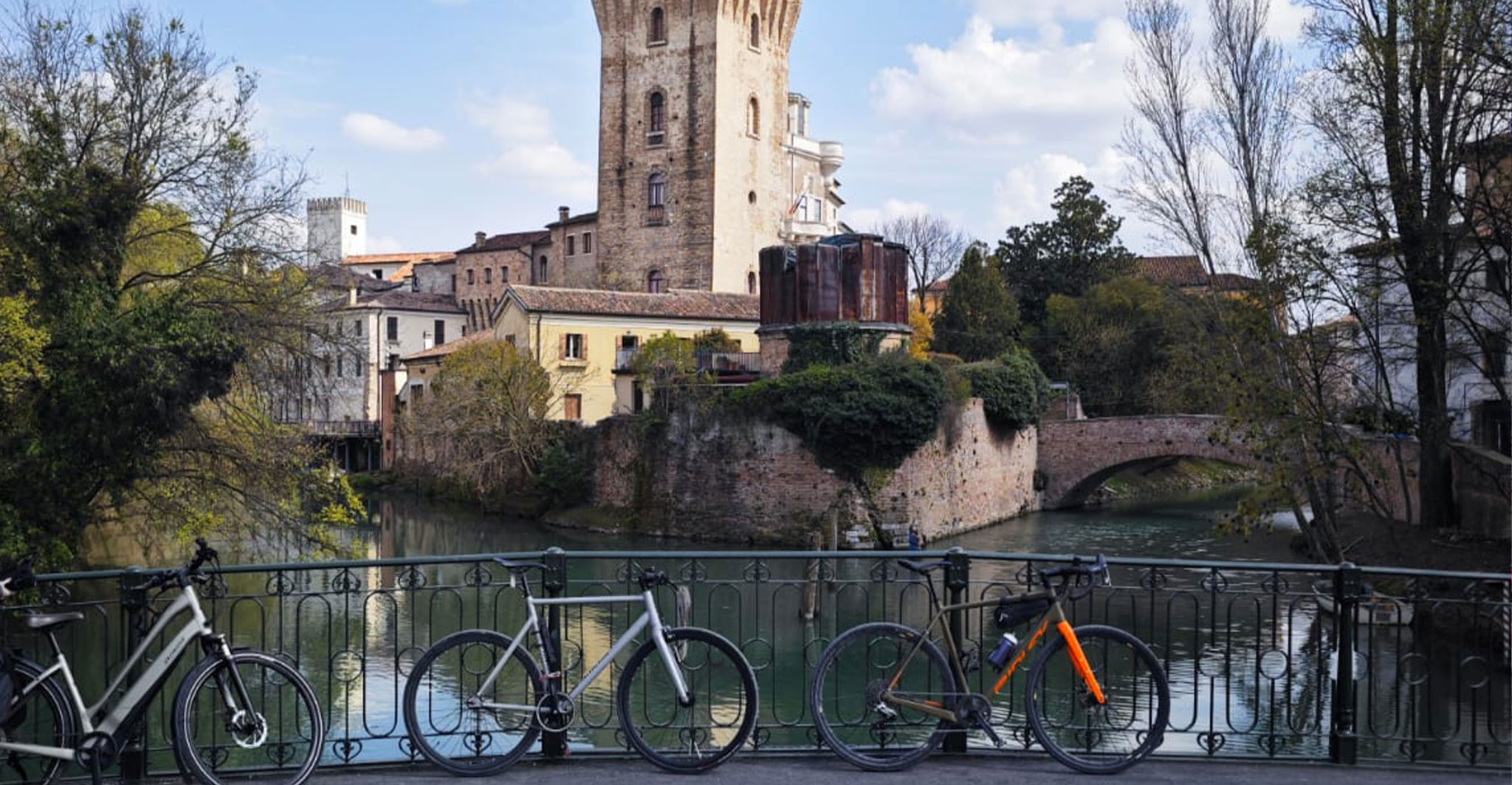
Today, participants in the Padova Water Marathon, after passing under the narrow and low arch of Ponte dei Cavalli, enter the city and paddle along the stretch of river known as the Tronco Maestro. After passing the Alicorno tower, they follow on the right, for several hundred meters, a wide green floodplain now equipped as a playground park—this was the “beach” of Padua in the 20th century. Here stood the facility that welcomed thousands of locals each year who loved swimming in the waters of the Bacchiglione.
The desire for a place in the sun was so strong that in 1924 a second small “beach” was created right in the city center, on the “maresana” at the foot of the historic walls of the Arena Gardens, next to the bridge on Corso del Popolo—the straight road inaugurated in the early 1900s, one kilometer long, connecting the city center to the new railway station. From then on, for over a century and a half, until 1957 when the first Olympic swimming pool was inaugurated, that facility remained Padua’s “beach.”
It is incredible to read articles from local newspapers and national sports publications, such as La Gazzetta Sportiva, from those years, describing the swimming activities that took place along the Tronco Maestro and in many other Italian rivers.
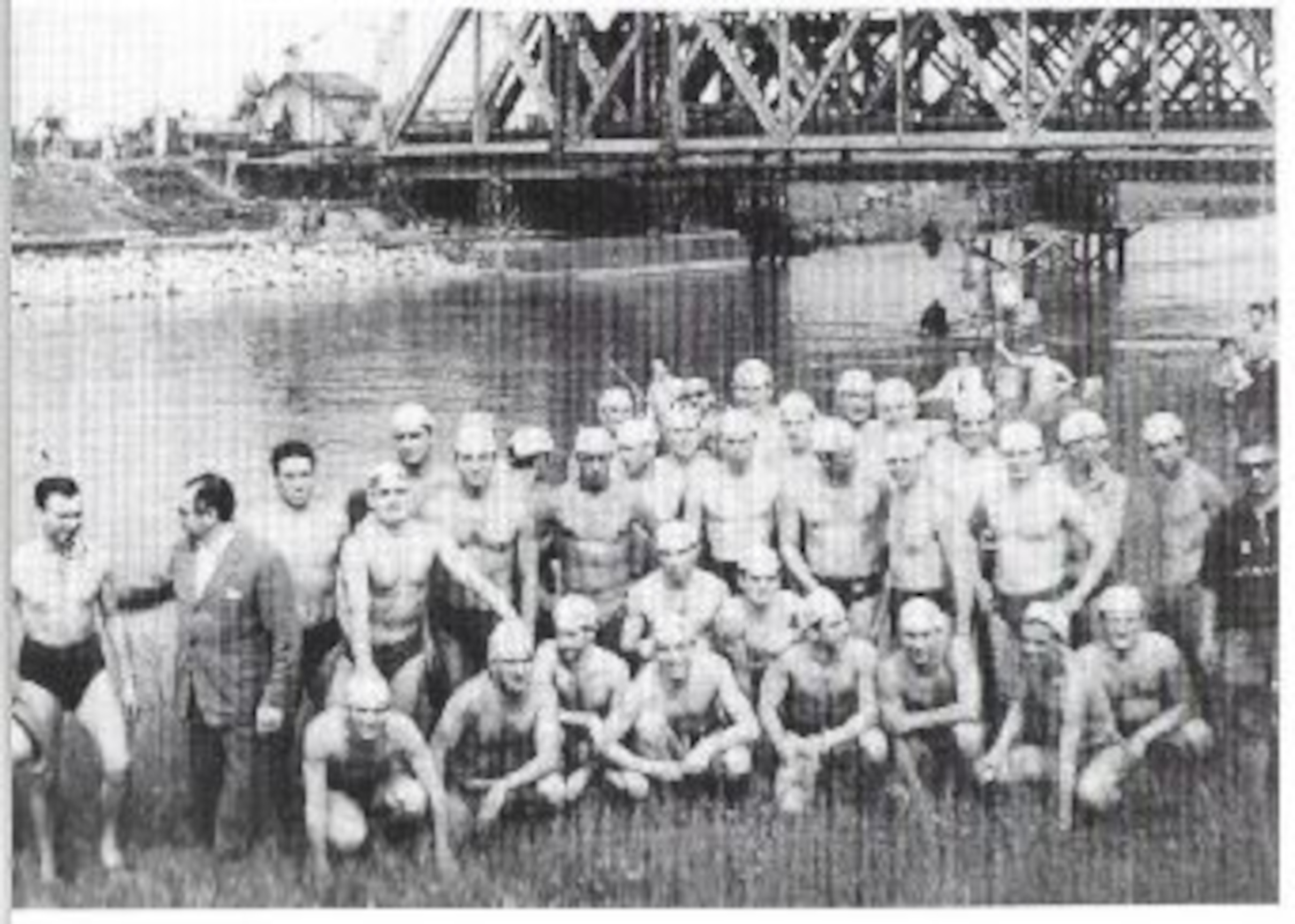
In 1909, the first edition of the Padua swimming crossing, the “Royal Cup of Padua,” was held, starting from the Rari Nantes facility and finishing at Ponte Molino—over 3,000 meters in length. National and international competitions were organized, including “winter endurance” events that attracted athletes and curious spectators who sometimes watched, even in the snow, swimmers crossing the Bacchiglione in freezing temperatures.
Water polo—then called water-polo—also made its debut here, played upstream of the Scaricatore bridge in 1921. A few years later, a dedicated field was set up downstream of the bridge, where regional championships were held, drawing large crowds who gathered along the riverbanks to watch the matches.
Texts and photographs taken from: Roberto Bettella, Rari Nates Patavium 1905, Padua 2007.